Product Brief
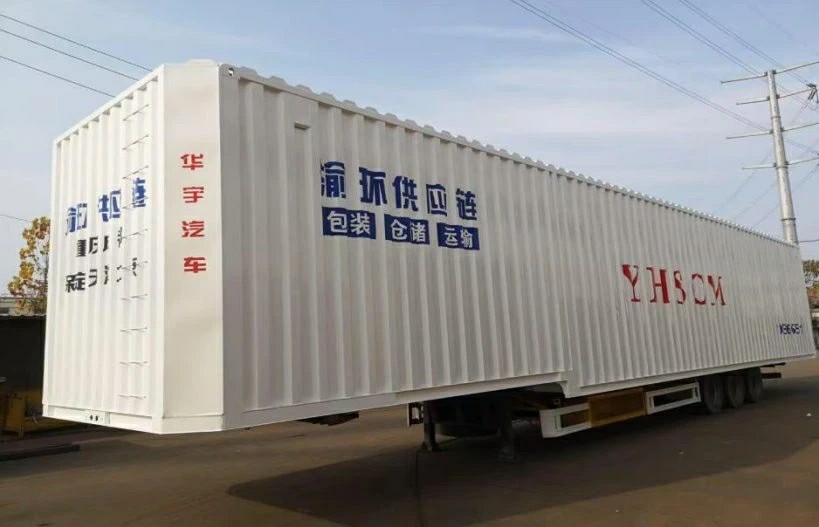
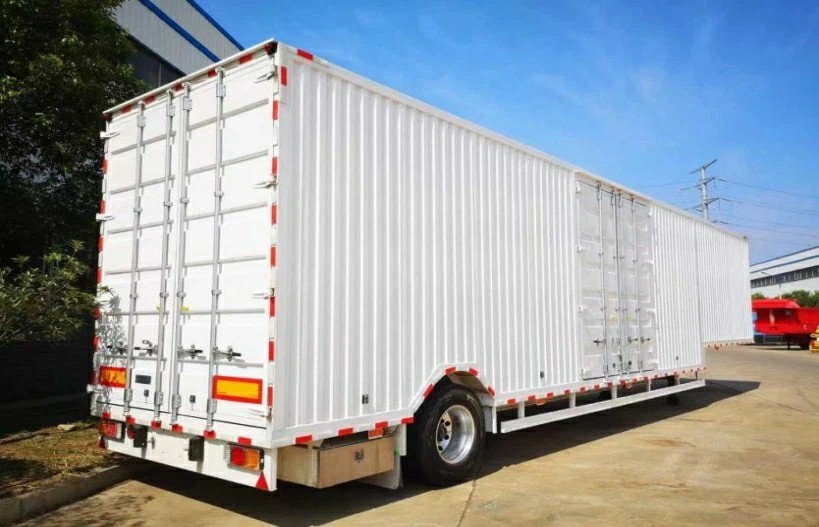
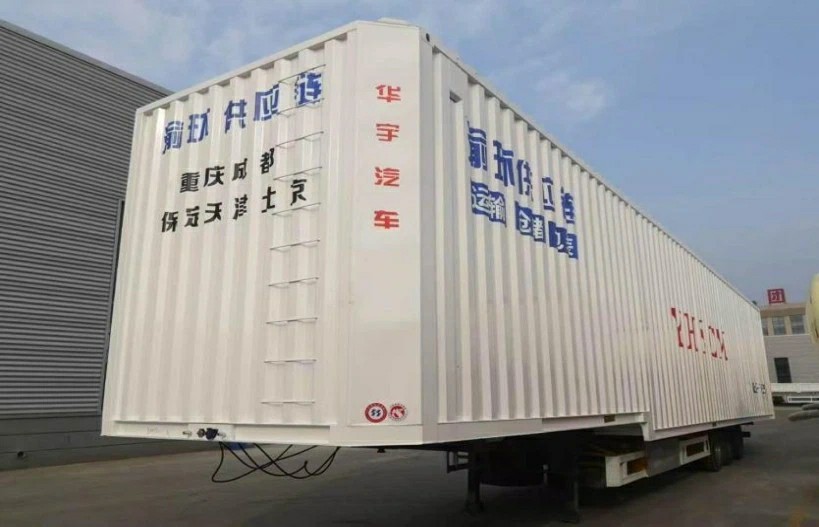
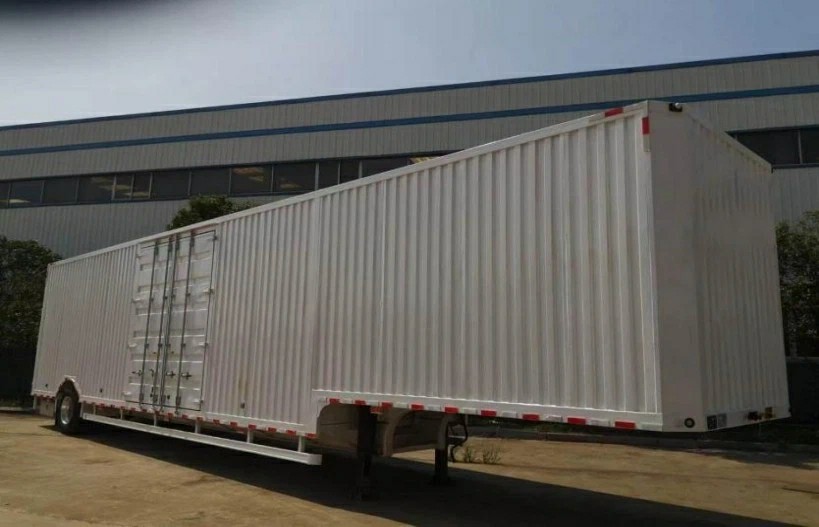
It is a dedicated logistics semi-trailer that integrates "high cargo capacity, convenient loading/unloading, and adaptability to high-frequency express transshipment".
Product Details
The core of the express logistics box-type semi-trailer lies in its ultimate lightweight design and high efficiency. In terms of materials, it generally adopts high-strength steel or aluminum alloy frames, combined with fiberglass-reinforced plastic (FRP), aluminum alloy, or more advanced polyurethane "sandwich" composite panels for the skin. This design ensures structural strength while significantly reducing the vehicle's self-weight.
The technical core focuses on CAE simulation-optimized structures and automated welding/riveting processes to improve quality. It also integrates aerodynamic design and IoT (Internet of Things) intelligent systems, achieving reduced drag and energy consumption, load monitoring, cargo tracking, and remote management-ultimately enhancing the operational efficiency of the entire logistics chain.
Product Parameters
|
Parameter |
Specifications |
|
Length (mm) |
13590, 13750, 14500, 15000, 16000 |
|
Width (mm) |
2500, 2600, 2700, 2800, 2900 |
|
Height (mm) |
4000, 4200 |
|
Number of Axles (Optional) |
2-axle, 3-axle |
|
Body Material |
Aluminum Alloy |
Product Advantages
The express logistics box-type semi-trailer is the mainstay of trunk-line transportation in modern logistics systems. Its core advantages lie in high capacity, lightweight design, and strong protection.
The regular-shaped compartment maximizes loading space.
The use of aluminum alloy, high-strength steel, and composite materials significantly reduces self-weight, increasing load capacity and saving energy.
The fully enclosed structure effectively protects against rain, cargo damage, and theft, ensuring cargo safety.
Applications
Currently, this model is widely used in trunk-line transportation for express and fast freight, connecting major distribution centers.
It is also suitable for transporting high-value goods, precision instruments, and goods requiring thermal insulation inside the compartment. With its standardization and high reliability, it has become a key piece of equipment supporting efficient logistics networks.